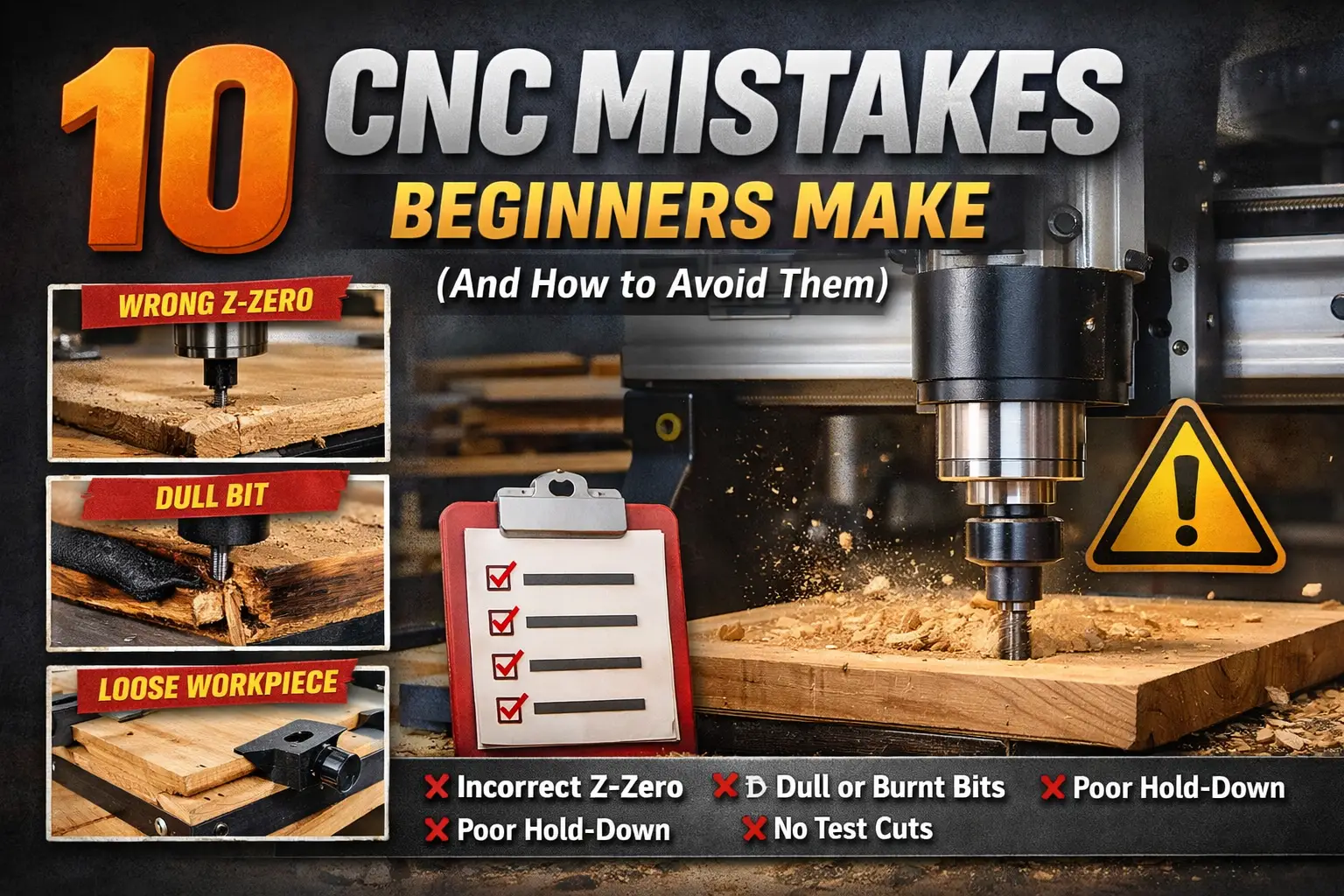
Getting started with CNC machining is exciting. With modern desktop machines like the CNC Shark, anyone can create professional-quality signs, carvings, furniture parts, and custom projects right from their shop.
But like any new tool, there is a learning curve.
Many new CNC users run into the same problems during their first few projects. The good news? Most mistakes are easy to fix once you know what to look for.
Below are 10 of the most common CNC mistakes beginners make—and how to avoid them.
One of the most common beginner mistakes is setting the Z-zero incorrectly.
If the Z-zero is too high:
The bit barely cuts the material.
If it’s too low:
The bit may plunge too deep and break.
Always double-check your Z-zero before starting a job. Many CNC users prefer setting Z-zero on the top of the material, while others reference the spoilboard. Either method works as long as it is consistent with your toolpath setup.
Not all CNC bits are created equal. Beginners often try to use one bit for everything, which can lead to poor results.
For example:
| Bit Type | Best Use |
|---|---|
| Upcut | Fast chip removal |
| Downcut | Clean top edges |
| Compression | Plywood & laminated materials |
| V-bit | Sign carving and lettering |
Build a basic bit collection designed for CNC work. Having the right bit for the job improves cut quality and tool life.
Many beginners assume slower is safer, but running a CNC machine too slow can cause problems.
Slow feed rates often lead to:
Burn marks on wood
Dull bits
Excessive heat buildup
Use recommended feeds and speeds for your material and bit size. Proper chip removal keeps the bit cooler and produces cleaner cuts.
If the material moves during a cut, the results can be disastrous.
Even slight movement can cause:
Misaligned toolpaths
Broken bits
Ruined projects
Secure your material using reliable hold-down methods such as:
Clamps
Double-sided tape
Threaded inserts
T-track systems
A stable workpiece is essential for accurate machining.
Many beginners run a project using their good material without testing.
If something is wrong, you may discover it after the material is already ruined.
Always run:
A preview in your software
A test cut in scrap material
Testing helps confirm your settings before committing to the final piece.
A dull bit produces poor cut quality and puts extra stress on your CNC machine.
Signs of a dull bit include:
Burn marks
Rough edges
Increased cutting noise
Inspect your bits regularly and replace them when needed. Sharp tools produce cleaner cuts and extend machine life.
Your spoilboard must be perfectly flat relative to the machine.
If it isn’t:
Cut depths will vary
Carvings may look uneven
Through-cuts may fail
Use a surfacing bit to flatten your spoilboard periodically. This ensures consistent cutting depth across the entire table.
Wood chips and dust can build up during machining.
This buildup can cause:
Bit overheating
Poor cut quality
Recutting of chips
Use proper dust collection or periodically pause the job to clear chips if necessary.
A clean cutting area improves both performance and safety.
Many mistakes happen simply because something was overlooked before pressing Start.
Common oversights include:
Incorrect bit installed
Loose collet
Wrong toolpath selected
Material not secured
Develop a pre-run checklist to verify everything before starting a job.
Taking a minute to double-check can save hours of frustration.
CNC machining is a skill that improves with practice.
Your first few projects may include:
Small toolpath errors
Surface imperfections
Learning moments
And that’s completely normal.
Start with simple projects and gradually increase complexity as you gain experience.
Every project teaches something new.
Learning CNC machining is an incredibly rewarding process. Once you understand the basics and avoid common mistakes, you can create everything from custom signs and furniture parts to detailed carvings and professional products.
By keeping these tips in mind, new users can dramatically improve their results and enjoy a smoother CNC experience.
Whether you’re just starting out or looking to refine your workflow, the key is simple:
Plan carefully, test often, and keep learning.
If you’re exploring CNC machining or looking for a reliable machine for your shop, check out the CNC Shark lineup from Next Wave CNC, proudly designed and built in the USA to help makers turn ideas into finished projects. Visit nextwavecnc.com/